技術詳情
首頁 > 技術鏈結 > 氣相色譜-質譜分析技術氣相色譜-質譜分析技術(GC-MS)可針對複雜樣品中的揮發性及半揮發性有機化合物進行定性與定量分析。樣品經氣相色譜分離後,由質譜系統依化合物的質荷比(m/z)及特徵質譜圖進行鑑定,並可透過標準品或質譜資料庫進行比對。GC-MS 廣泛應用於環境、食品、藥品、石化、材料及法規檢測等領域。
Gas Chromatography–Mass Spectrometry (GC-MS) Analysis Technology enables the qualitative and quantitative analysis of volatile and semi-volatile organic compounds in complex samples. After chromatographic separation by gas chromatography, compounds are identified by the mass spectrometry system based on their mass-to-charge ratios (m/z) and characteristic mass spectra. Identification can be further supported by comparison with reference standards or spectral databases. GC-MS is widely used in environmental, food, pharmaceutical, petrochemical, materials, and regulatory testing applications.
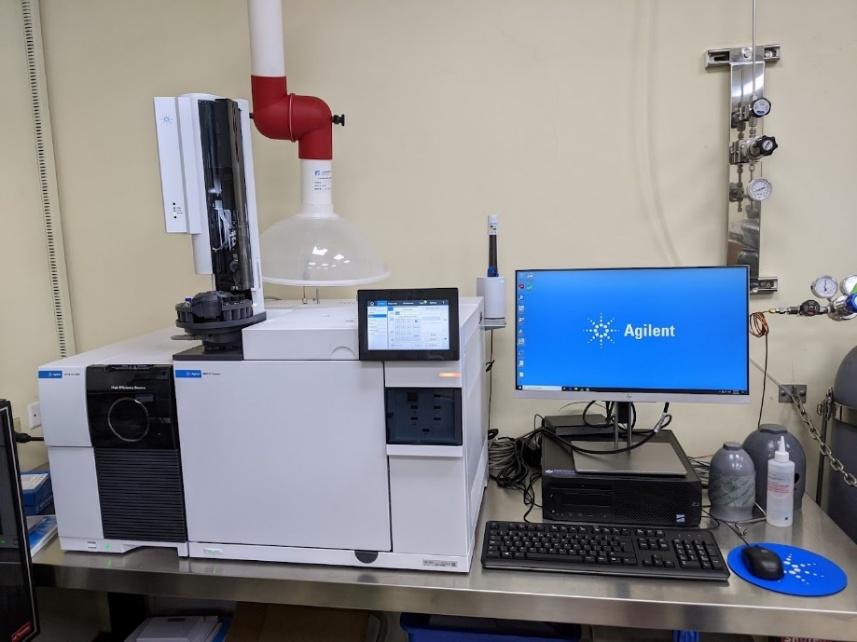
- Oven:range from 4 °C to 450 °C, maxing heating rate 120 °C /min
- Mass range: 10 to 1000 amu, and the scanning rate can reach 20000 amu/s.
- Two operating modes: full scan (Scan) and selected ion monitoring (SIM).
- Using turbine-type high vacuum pump, the gas flow can reach 255L/s
- Ion source:High Efficiency Source (HES)
- Quadrupole:range from 120°C to 200°C.
- Instrument detection limit: IDL≤ 1.5 fg.
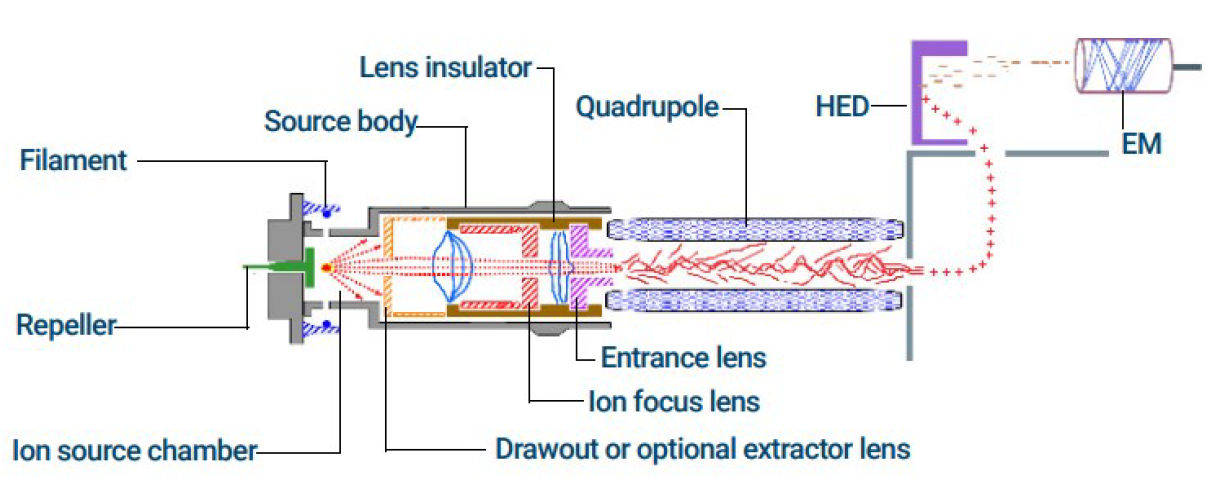
Gas Chromatography-Mass Spectrometry (GC-MS)
- 定性分析(Qualitative Analysis)
Gas Chromatographic Separation : Samples are vaporized and separated based on boiling point and polarity. - 定量分析(Quantitative Analysis)
Internal Standard / External Standard Method : Quantifying target analytes using characteristic ions. - 微量與痕量分析(Trace and Ultratrace Analysis)
High Sensitivity Detection : Capable of detecting trace organic compounds down to ppb or ppt levels.
GC-MS Chromatogram and Mass Spectrum